
The First Lesson for New Students of the Guzheng
Last Thursday evening marked my first guzheng lesson for the 2011 cohort of freshmen who had chosen it as an elective. Due to the students’ recent military training and my own poor health, which necessitated a period of rest at home, their studies had been delayed. Henceforth, lessons will be held twice weekly, scheduled for Thursday and Monday evenings.
This cohort comprises twenty students who have chosen to study the guzheng. Their motivations for selecting this instrument likely fall into several categories: (1) They find the instrument’s timbre exceptionally pleasing and hold a strong personal affinity for it. (2) Compared to other instruments such as the erhu or violin, the guzheng is perceived as relatively straightforward to begin learning and relatively easy to master. (3) They perceive learning the guzheng as straightforward, making it an easy way to earn credits. Regardless of their motivations, as their teacher, I must guide them towards establishing a proper purpose for studying the instrument.
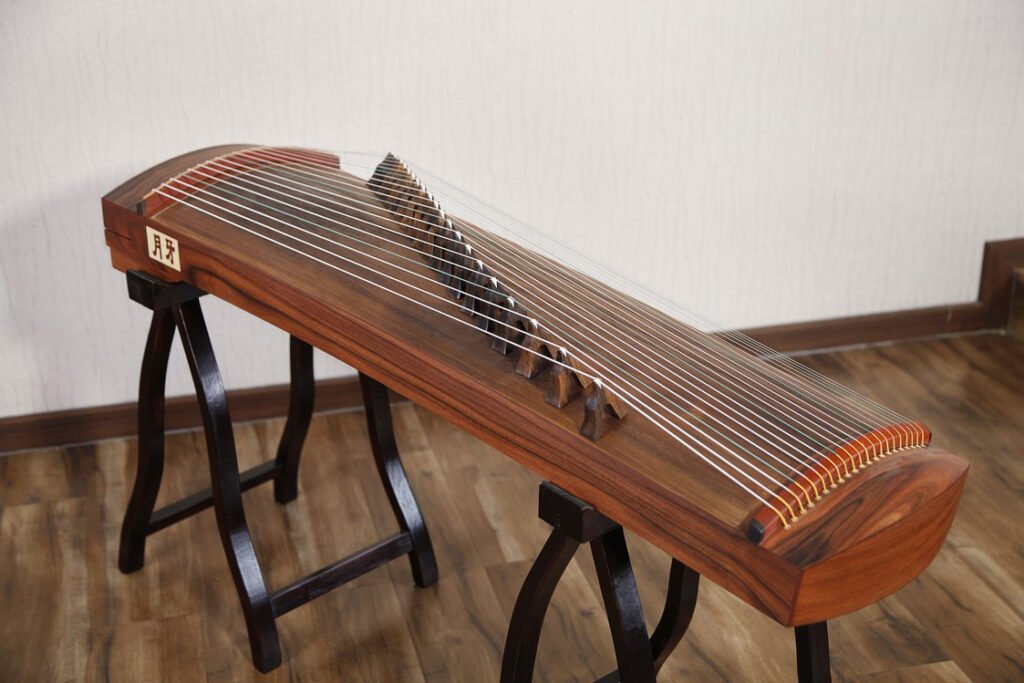
Last Wednesday afternoon, I gathered all students enrolled in the guzheng elective (including my eleven major students this year). I began by outlining the instrument’s historical development, current status, and the benefits of studying it. The primary aim was to inform them that three million people nationwide are currently learning the guzheng, yet there is a severe shortage of qualified teachers. society demands a substantial number of zheng instructors. Over your four years of study, I shall not only teach you to play the instrument but, more importantly, how to teach it effectively. Subsequently, I introduced the nationwide chain training institution, ‘Hundred Schools of Zither Resonance Art Centre,’ highlighting several of my former students who have achieved notable success post-graduation (at the Changzhou branch, Wuxi Branch, Jiangning Branch, Dongtai Branch, etc.), aiming to instil confidence and show them the prospects of mastering this instrument. With a specialised skill, their career paths would broaden considerably. Finally, I demonstrated fundamental zither techniques, performing numerous classical pieces alongside familiar popular songs. This aimed to spark students’ interest, bolster their commitment to learning, and clarify that mastering the zither requires more than mere enthusiasm—it demands systematic technique and persistent practice.
Per our college regulations, elective classes are typically taught in pairs. However, this cohort saw unusually high enrolment, compounded by students from years two to four, making individual scheduling impossible. Consequently, this year’s electives were organised as group sessions accommodating twenty students. This large-scale format fosters a vibrant collective learning atmosphere while enabling the dissemination of group-class teaching methodologies – a highly effective pedagogical model worthy of wider adoption.
For group instruction, besides the fixed classroom and instruments mentioned earlier, the following must be prepared: a teaching zither, a suitably sized raised platform (to enable students to observe the teacher’s hand positioning and demonstrations), a metronome, speakers, music stands, zither stools, and earplugs.
The first session on Thursday evening runs from 7:00 pm to 8:30 pm. The teaching sequence is as follows:
(1) Begin with a brief introduction to the basic structure of the guzheng and the names of its components. This knowledge point should be covered lightly.
(2) Fingertip Protector Fitting: (Refer to the textbook) The teacher should explain and demonstrate the fitting of the protectors while having students fit them themselves. The teacher must provide individual guidance to each student. Requirements for fingernail attachment: (1) Viewed from the back of the hand, the artificial nail should extend only slightly beyond the natural nail. (2) Viewed from the front, the base of the artificial nail must not exceed the first knuckle of the finger. (3) Wrap adhesive tape around the finger two and a half to three times. (4) Ensure the tape is applied neatly.
(3) Seated posture for piano playing
(4) Explanation of fundamental techniques: right-hand techniques including pressing, stroking, plucking; left-hand techniques including vibrato
Students commence their studies with considerable enthusiasm. However, first-year undergraduates encounter unfamiliarity with campus life, compounded by the demands of multiple subjects. Particularly at our teacher training institution, piano studies constitute a significant workload, with students dedicating considerably more time to piano practice than to the guzheng. Consequently, as principal subject tutors, we must assist students in rationally allocating their time to ensure scientifically sound practice. Given the finite nature of practice time, For beginners, forty-five minutes of daily practice is sufficient. Hence, we advocate group lessons and collective practice sessions.