
The Importance of Mastering the Fundamentals of Guzheng!! (Essential Reading for Beginners)
Some find learning the zither increasingly fascinating, growing ever more enthusiastic and devoted to their studies. Even when encountering difficulties, they become all the more exhilarated. Others, however, begin with great interest only to find the instrument progressively more challenging, their enthusiasm waning until they abandon their studies altogether. Why does this happen? One reason lies in failing to establish a solid foundation through diligent practice of fundamental techniques.
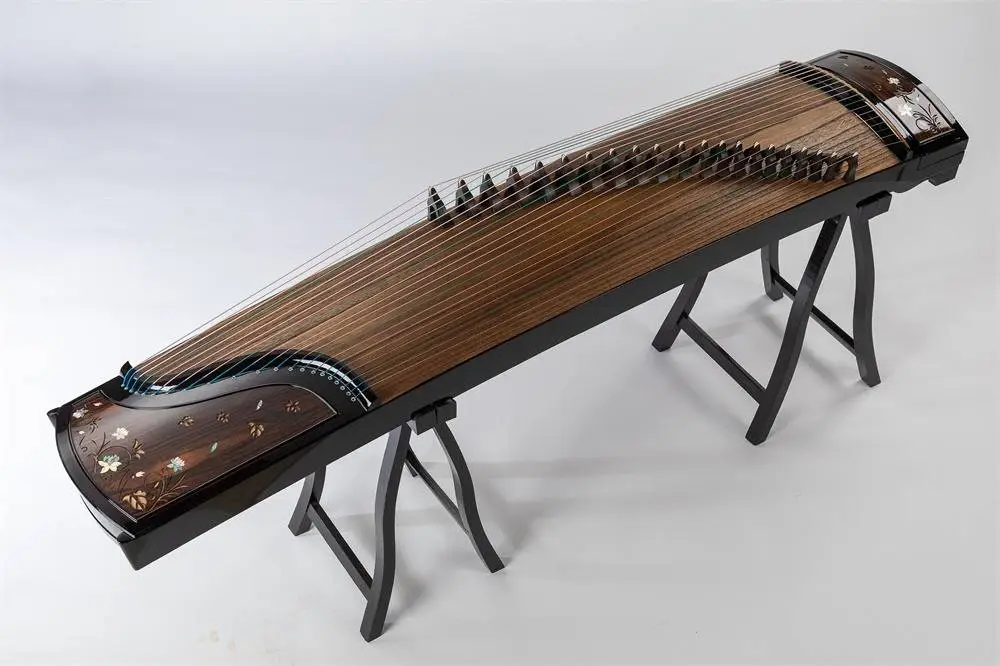
What constitutes a foundation? It is the fundamental basis or starting point for any endeavour. A towering edifice rises from level ground; without a solid foundation, no grand structure can be built. In the context of guzheng grading examinations, elementary pieces form the foundation for intermediate pieces, which in turn lay the groundwork for advanced pieces. Finger techniques are the bedrock of technical proficiency; fundamental techniques like plucking, lifting, and sliding serve as the foundation for other fingerings. Traditional pieces provide the foundation for modern compositions; short pieces form the foundation for extended compositions; simple techniques underpin complex ones, and basic music theory underpins advanced theory; moving oneself through performance lays the groundwork for moving others; mastering simple musical treatments is the foundation for tackling complex ones… Foundations, like the bedrock of a building, must be solid and robust. To build a strong foundation in zither playing requires steadiness and practicality, enabling significant future development.
What constitutes fundamental skills? These are the essential knowledge and techniques indispensable to zither performance. Such fundamentals may be broadly categorised into two domains: intrinsic zither skills and extrinsic zither skills. These domains mutually permeate and reinforce one another, with some even asserting that true mastery lies beyond the instrument itself. I perceive cultivating fundamental skills as a journey with a starting point but no endpoint; viewing it as a multifaceted, holistic endeavour is key to mastering these essentials.
How does one lay a solid foundation and master fundamental skills?
The fundamental approach is to proceed step by step; there is no better method than this. What is sequence? It refers to the order of learning – what to study first and what to study later. What constitutes “循”? It refers to adhering to systematic steps that enable gradual advancement and improvement, also termed a “procedure”. This constitutes a learning plan and arrangement, invariably reflecting a progressive process: from easy to difficult, simple to complex, minimal to extensive, small to large, and from limited knowledge to comprehensive understanding. Deviating from this procedure by pursuing learning capriciously, relying solely on personal will, often yields counterproductive results. Regarding the learning sequence for the guzheng, the Central Conservatory of Music, the China Musicians Association, and the China National Orchestra Society have all established reference repertoires for graded examinations. This can be considered the established sequence for amateur learning. With such a sequence in place, one must study according to it, as the various foundations and fundamental skills are embedded within these stages. Arbitrarily skipping levels during zither study, seeking shortcuts like playing checkers, is inadvisable. One must approach it like mountain climbing: each step taken earns genuine understanding and reward. Adopt the mindset that today lays the groundwork for tomorrow, this piece prepares for the next, and this stage builds the foundation for the next. By grounding yourself in today’s tasks and doing them well, will you then worry about tomorrow?
At what level does one’s foundational skill become proficient? This varies according to individual aspirations: some seek merely to entertain themselves, others aim to pass examinations and obtain certificates, some aspire to achieve rankings in graded competitions, while others pursue concert-level performance. Thus, ‘proficiency’ exists on multiple tiers, and defining this ‘good’ is difficult. The best approach is to establish your own learning objectives and dedicate yourself to extensive practice.
In teaching the guzheng, one should not confine oneself to the ten pieces prescribed for each grade level. Instead, adjust and supplement the curriculum according to the student’s capacity, extending the overall learning period to study more pieces and build a solid foundation. Even mastering elementary pieces to a truly commendable standard is, frankly, no simple feat. Some teaching approaches at this stage involve selecting just one or two pieces per grade before making significant leaps forward. This results in shaky foundational skills, making intermediate and advanced pieces increasingly challenging. It also fosters poor learning habits: a lack of diligence, a rush to cover material, with little regard for quality or effectiveness. This leads to a situation where as much as they learn, they forget, leaving them with only a handful of pieces that they can barely manage. In truth, the beginner stage should not merely focus on teaching students a few pieces for exams and progression; it should also involve imparting relevant knowledge, enabling them to learn more, understand how to study and practise effectively, and recognise when their practice has reached a satisfactory level. From a young age, a rigorous standard should be upheld—not lowered or relaxed. Instead, we must elevate the spiritual and artistic dimensions, laying solid foundations and mastering fundamental techniques. It is preferable to invest extra effort and time in this pursuit, for only thus can learning become increasingly enjoyable and conducive to genuine development.