
Key Considerations for Beginners When Selecting a Guzheng
One frequently encounters articles advising beginners on selecting guzheng instruments, most of which focus on distinguishing between wood types, varieties, and grades. Such information is widely available online, yet many lack expertise in woodcraft. Therefore, we shall analyse the matter from another, more readily identifiable perspective.
1. The soundboard takes precedence. Regardless of the instrument’s price point, both the soundboard and backboard are crafted from paulownia wood, though grades vary. The primary distinctions lie in grain pattern and density. A quality instrument should exhibit clear, unblemished grain free from insect damage, knots, or decay. Joints should be seamless, with no visible gaps. In essence, the instrument should present a flawless appearance.
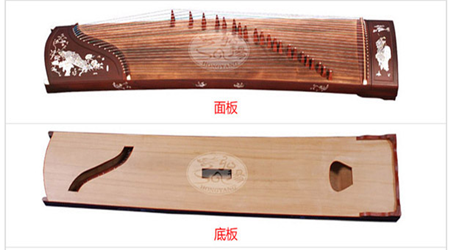
2. The wood used for the sides, headstock, and tailpiece varies by grade. Generally, higher-end guzhengs employ rosewood, while premium instruments may utilise sandalwood or similar. Crucially, check for edge binding: if present, it almost certainly indicates a laminated instrument. Such guzhengs are absolutely undesirable – much like purchasing leather shoes or where genuine leather would never be wrapped around the edges.
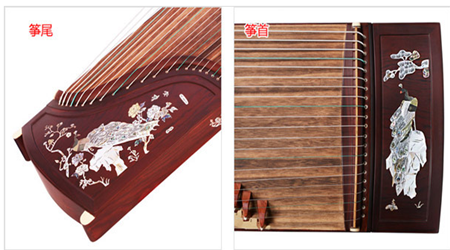
3. Beyond examining the grain and edge-banding, one may also open the soundboard cover—the panel on the instrument’s right side—to inspect the interior. Should it be coated with paint, the instrument should be rejected, as this indicates cost-cutting measures. Applying paint to the interior is the most economical and labour-saving approach. A well-crafted instrument typically presents one of two scenarios beneath the cover: either a bare, smooth surface that feels quite slippery to the touch, devoid of paint and appearing finely textured; Secondly, it may feature a layer of velvety fabric. Crucially, this fabric must be finely woven and offer a pleasant tactile sensation. Inferior instruments often employ coarse, rough-textured fabric instead.
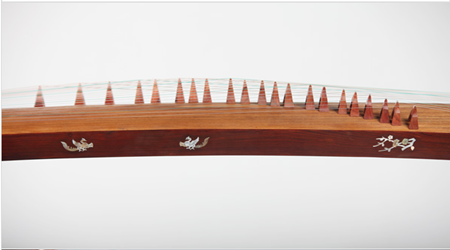
4. String action height is another detail to observe; it should be uniformly consistent across the fretboard. Bear these points in mind, then shop around. Timing your visit matters: if possible, go on a weekday morning. Weekends tend to be busier, with more customers and potentially tougher bargaining once you’ve settled on an instrument. Weekday mornings are quieter, offering a chance for a straightforward transaction – provided you’re prepared to haggle.