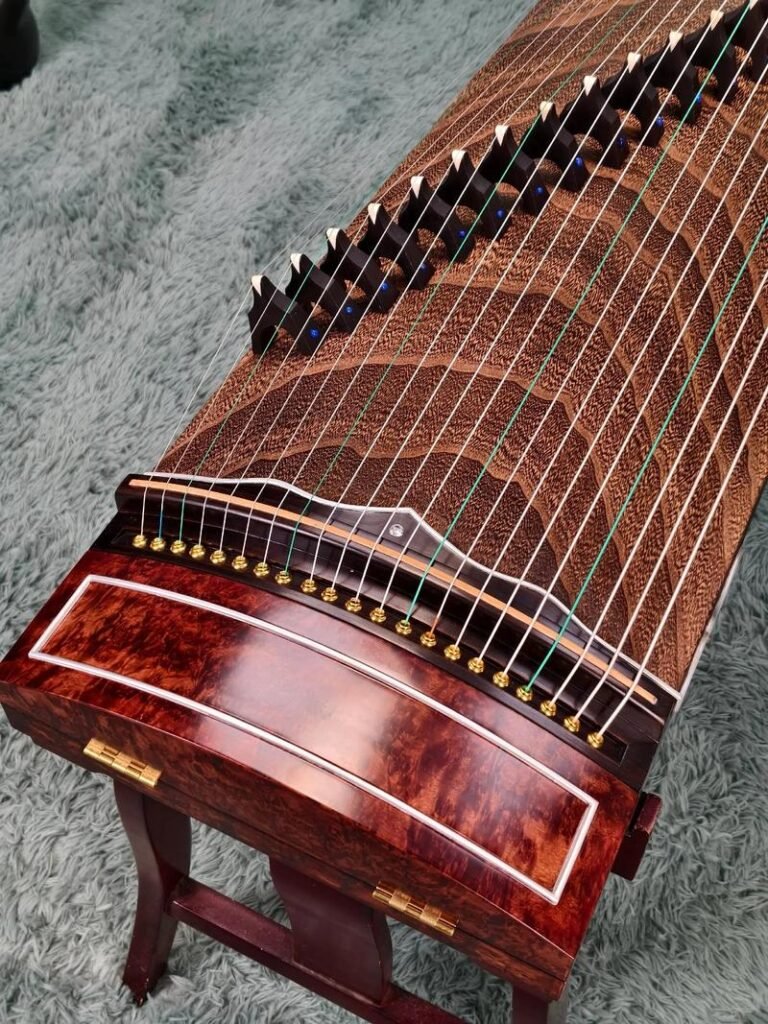
The Evolution of Guzheng String Materials
Chinese traditional musical instruments are categorised into three principal types: wind instruments, stringed instruments, and percussion instruments. As the most representative traditional stringed instrument, the selection of materials for the zither's strings is undoubtedly of paramount importance.In crafting any stringed instrument, the first step involves designing the string’s vibrational frequency (tension) and form (diameter and length), that is to say, its mass and specifications.
Historically, guzheng strings underwent several developmental phases. Early versions typically employed dried animal sinew (deer sinew) or animal hair (horsehair) for strings. These materials produced a mellow tone but suffered from low volume, susceptibility to tuning instability, and short lifespan.
In modern times, nylon strings began to replace them, though the change was not significant. The Chaozhou zither adopted bare steel strings instead, achieving a soft, delicate, and richly resonant playing style with increased volume, though somewhat stiff.
Against the backdrop of rapid advancement in guzheng performance techniques, musicians demanded increasingly sophisticated strings. Pioneering practitioners adopted nylon-coated steel strings as a compromise between traditional and modern specifications. This innovation elevated guzheng string development to unprecedented heights, synthesising the mellowness of traditional strings with the resilience of steel. The resulting qualitative leap in volume garnered widespread industry endorsement and became standard across manufacturers.